
StreetGames: The Power of Sport in Under-served Communities
By Eddie Hillier, Economist and Data Analyst at State of Life
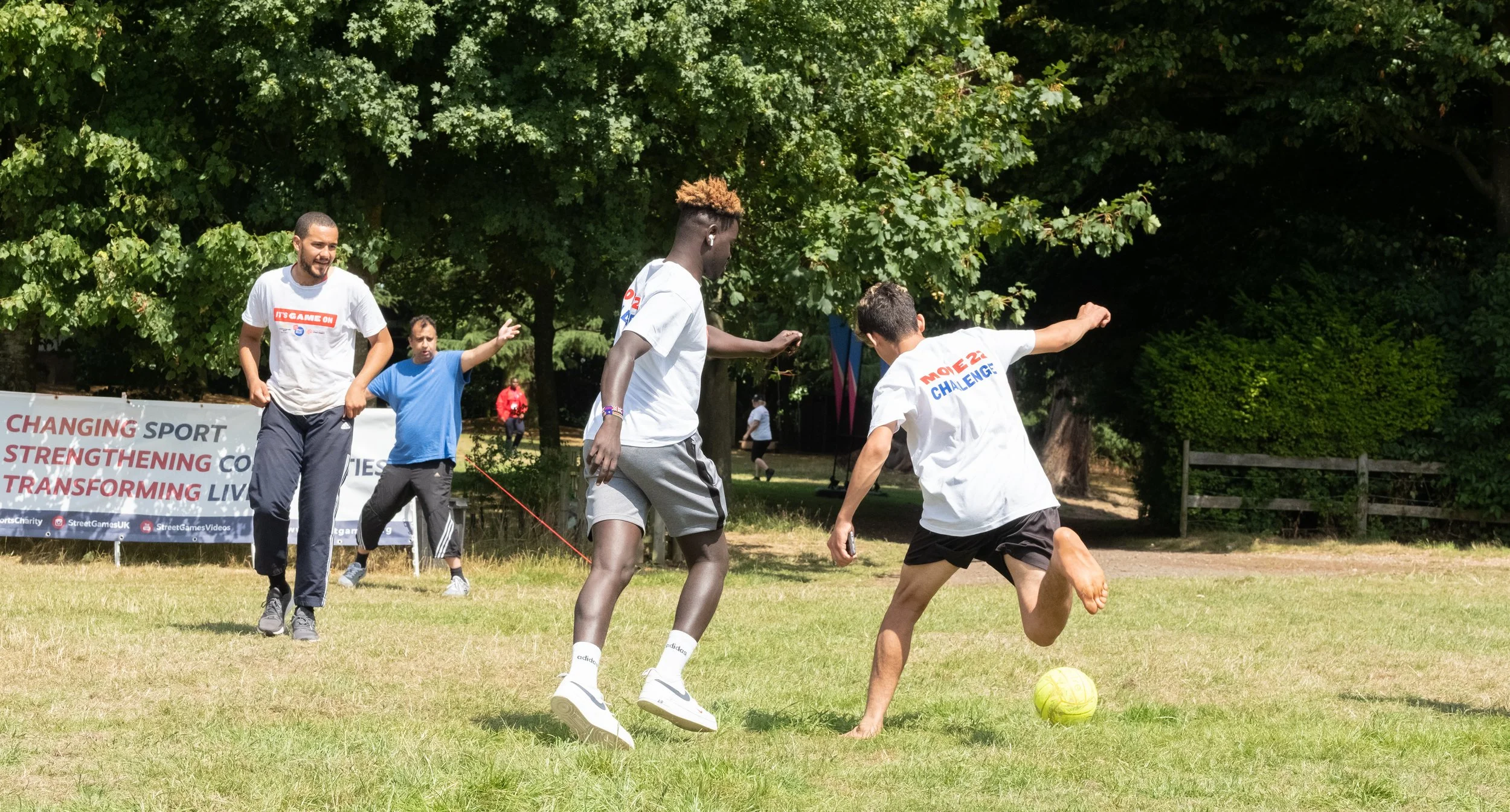
We recently teamed up with StreetGames, a national charity harnessing the power of sport to improve young lives. Through over 1,600 community partners across the UK, they provide opportunities for children and young people to play sport in low-income and under-served areas - often where opportunities can be the hardest to come by.
Using survey data collected by StreetGames, we set out to better understand the social value that these activities can deliver.
The value of sport and physical activity
In our recent Year 2 of the Social Value Model of Sport England, we can see that being active is linked to better wellbeing for children and young people, and the total value of sport and physical activity is estimated at around £14 billion a year. In other words, getting involved in sport could offer substantial benefits.
The cost of inequality
StreetGames focuses on communities that often face the biggest barriers to taking part. These might include limited access to local facilities, financial pressures on families, or a lack of confidence that makes getting involved feel harder.
We find that children and young people who face more inequalities, such as those from low-affluence families or with limited access to parks or playing fields, tend to be less active than their peers from other backgrounds.
Crucially, they also appear to gain less benefit from increasing their activity levels. This may reflect differences in choice, opportunity, or the quality of sport available, or be linked to lower levels of enjoyment or motivation. Our previous work with Youth Sport Trust found that motivation and enjoyment accounted for at least half of the wellbeing benefits of physical activity at secondary school age.
When we factor in these gaps in both participation and value, we estimate that the social cost of inequality for young people is around £1.4 billion each year. Clearly, tackling these inequalities can make a real difference.
Helping those with the greatest need
Looking at the survey data, we found that for over 25% of these kids in the sample, StreetGames provision featured in every day that they reported engaging in sport or physical activity. For over 60% of the sample, StreetGames provision accounted for at least half of all days on which they were active.
This suggests that StreetGames provision may be the only place for many young people to benefit from sport and physical activity, reaching the communities that need support the most. Without it, they might have few, if any, other opportunities to be active. In many of these areas, they can’t simply head down the road to another football or tennis club.
Large potential benefits for these groups
Our analysis shows that greater participation in StreetGames is associated with large improvements in personal wellbeing. Using the WELLBY valuation method, we estimate the potential social value of participation to be around £13,000 per person.
This suggests that StreetGames may be breaking down barriers to choice, opportunity, and quality, helping improve young people’s enjoyment and motivation, and delivering large wellbeing benefits.
Looking more closely at participation, we also find evidence that the link between engaging in StreetGames provision and wellbeing strengthens over longer periods, suggesting that these potential wellbeing benefits may grow even further with time.
Keeping the ball rolling
It is important to recognise that our analysis does not prove cause and effect, and the data may be influenced by some young people dropping out of the survey. However, even with these caveats in mind, the findings are compelling. They suggest that StreetGames can provide a way to address the stark inequalities in sport and physical activity for young people, and has the potential for large social value.
Further research, using richer data and alternative methods, will help build confidence in these findings and deepen our understanding of how participation shapes outcomes. With such a large social cost of inequality facing young people, it’s vital that we keep pushing this work forward. This may be the end of the first half, but it’s far from the final whistle.
For more detailed findings, see the StreetGames infographic.